Wednesday, April 11, 2012

Q&A with Maureen Minehan

MEG member Maureen Minehan's solo show, "One Morning" features images from a single shoot on the Delaware coast last summer. MEG will host a reception for the show this Sunday, 4/15, from 3-5 pm. In the interim, Maureen answered a few questions about the images and how the mantra "live where you are" figures into her photography. 
Your show's subtitle is "One Morning. Two Hours. Eleven Images." How does that reflect the images in your show? All of the images were taken on a single morning near Rehoboth Beach, Delaware. I shot from 5-7 a.m. along the shoreline. At first, I was completely taken with the sublime quality of the light as the sun rose. Everything was awash in pinks and lavenders. Then, as the sun moved higher, the light started to shift to gold. I'd been worried the light would be too bright by the time I got to the lookout towers from World War I, but the gold set them almost aglow. Toward the end of the shoot, the sun was pretty high, but by shooting through the seagrass, I was still able to capture the lifeguard houses along the beach as I started to pack up. 
                                                                  (c) Maureen Minehan
You've said your mantra as a photographer has become "live where you are." What does that mean to you? It's a reminder to be creative wherever I am or with however much time I happen to have. I have two children that are still young (ages 6 and 7), I have my own writing business and I donate a considerable amount of time to several organizations. I'm living a life that I love, but it doesn't leave me a lot of time to focus solely on photography for extended periods. That doesn't mean I can't live a full creative life, however. I just need to make the most of what's right in front of me, finding inspiration wherever I happen to be. The images in my show reflect that -- I might have only had a  two-hour window on a family vacation to shoot, but I immersed myself in the experience and came away with images that mean something to me both artistically and personally, given where they were captured. 
                                                                   (c) Maureen Minehan
Many of the images have an ethereal quality that makes them resemble paintings almost more than photographs. Did you do something in the post-processing to create a watercolor effect? A number of visitors to the gallery have had to be convinced that they are photographs, not watercolors. Others have speculated that I handcolored the images. In reality, the post-processing of those images was pretty minimal. The light and the colors that morning combined into a luminous, very ethereal, tableau. Printing them on Epson Velvet Fine Art paper added a degree of texture, which heightened the painterly quality.
This is your first solo show at Multiple Exposures. Any lessons learned from the process of putting it together that might help other artists launching an exhibit? Calculate the amount of time you think it will take and then double it! It's a long process. Shooting the images is the easy part. Selecting which images make the cut for the show is harder as you look for cohesion among them in either content or look and feel. You need to always keep in mind that while you may understand how they are all related, you won't be standing next to every person who looks at your work so they need to "get" it without any input from you. Also printing, followed by matting and framing, requires an enormous attention to detail. In my opinion, those skills are critical to fine art photography in an era where everyone with a phone or even a Nintendo game device can capture a scene. Something can look really good on a small screen, but getting it from there to the wall is a completely different undertaking.

Please join us for Maureen's reception on Sunday, April 15th from 3-5 pm at Multiple Exposures Gallery, Studio 312, Torpedo Factory Art Center, 105 N. Union Street, Alexandria, VA. 


Tuesday, March 27, 2012

One Morning. Two Hours. Eleven Images

MEG member Maureen Minehan's new show, One Morning, is on the walls...stop by and see what Maureen captured in two hours on a summer morning in Rehoboth Beach, DE. A reception will be held Sunday, April 15th, 3-5pm.


Thursday, March 15, 2012

Introducing....

...MEG's new members-- Soomin Ham and Tim Hyde. We're thrilled to bring these two outstanding photographers on board! Each adds something unique to MEG's portfolio -- we hope you'll stop by to meet them and see their work.
Soomin Ham
                                                   (c)  Soomin Ham
If you feel like you're surrounded by sound when you look at Soomin's work, you could be right. Soomin holds degrees in both music and photography -- a Bachelor of Music in orchestral instrument from Ewha Women's University in Seoul, Korea and a Master of Art in photography and multimedia from New York University/International Center of Photography in New York -- and she often "sees" sound when composing her images. Soomin's works include multimedia installations, photography, and mixed media exhibits in venues around the world, including Washington, DC, New York and Seoul. Soomin was selected for an Art and Community Visual Arts Residency at the Delaware Center for the Contemporary Art in Wilmington, DE and a grant award from the National Endowment for the Arts. She also has been a recipient of D.C. Commission on the Arts and Humanities Grants. You can learn more about Soomin and her work here.

Tim Hyde
Tim Hyde's unique eye has been honed not only by years of photography, but by an interesting and diverse career path. Logging, filmmaking, teaching, legislative work and political consulting all appear on Tim's resume. He spent a decade in a variety of political and campaign positions, including presidential campaigns, before becoming an executive at RJ Reynolds Tobacco Company. And from 1998-2012, he was founding partner of DCI Group, LLC, a public affairs firm headquartered in Washington.
                                              (c) Timothy Hyde
With that much on his plate, it's hard to believe Tim found time for photography, but his list of accomplishments shows he has. Tim's work has been acquired by the Museum of Fine Art in Houston and his images have appeared in publications ranging from Lenscratch to LENS, the New York Times online photo magazine. You can learn more about Tim and his work here.


Wednesday, March 7, 2012

Pricing Your Work

Later this month, MEG will host Success as an Artist, a six-hour seminar led by Catriona Fraser, owner and director of The Fraser Gallery and an expert on what it takes to develop a successful fine arts career. One of the topics Kate will cover is pricing, and we asked her to share some insights ahead of time. 
MEG: What are some of the factors artists need to consider when setting prices? What harm comes from setting prices too low? Too high?
Fraser: Pricing your work correctly is one of the hardest things to do if you're an emerging artist without a sales history. A common mistake artists make is to ask other artists how to price their work...this leads to unrealistically high prices. Another mistake is to compare your work to what you perceive to be similar work in a gallery. The price of artwork has very little to do with artistic merit, or hours spent on the creative side...the price of art is based, for the most part, on the professional accomplishments of the artist...and size does matter...bigger is better.
Unfortunately, prices for fine art photographs by mid-career and established photographers have been in a steady decline over the last few years...you can buy a limited edition, signed and numbered print by an internationally known artist for under $1,500, so even very well established photographers with gallery representation, museum exhibitions, great reviews and multiple books published can only get $800 - $1,000 for their work...for emerging photographers prices are in the $200 - $400 range.
The main rules to remember when pricing your work are to start low to build your collector base; be consistent with your prices, whether you're selling from your studio or through a gallery; and gradually increase your prices as you build your professional credentials.
Fraser will share what it takes to build your professional credentials and much more at the seminar on March 22nd and March 29th at MEG. Information is available here. To register, please contact Fraser at 301-254-0586 or by e-mail at info@thefrasergallery.com.


Friday, March 2, 2012

Q&A With Karen Keating

MEG member Karen Keating shares some thoughts about Cuba Revisited, her new show featuring portraits of people in a changing and challenging place.
Last spring, you made your third trip to Cuba, but the first in eight years. What felt the same and what felt different when photographing on the streets? The streets of Havana seem busier, especially in the central part of the city. Tourists are the most visible -- traveling in groups, gathering as tour guides with umbrellas explain a building, an historical event or answer questions. This kind of group travel was not common in 2000 or 2001. The tourists are from all parts of Europe and the world except the United States.
               (c) Karen Keating
      In Old Havana, my favorite part of the city, there are new restaurants in the Plazas, more renovating and a subtle feeling that a kind of gentrification is occurring as well as displacement. The exuberance that I felt during my first few trips as I watched the daily unfolding of Cubans' lives, their ability to embrace each day, seemed missing.

Your portraits capture a sense of "watching and waiting," which was the title of your prior book on Cuba. Do you feel the emotion behind this watchfulness is the same today as it was during your prior trips? This is conjecture, not fact, but the emotion as Cubans watch and wait now seems to have an edge. Rules and regulations, if not laws, seem to be shifting, and people are looking for opportunities. Perhaps there is more intensity in their watching. I saw less "celebrating" or living in the moment, especially in Havana. In Regla and Matanzas, the pace of the day is slower and the number of visitors watching the Cubans is less and the people feel less watchful.

Many of your portraits are close up and personal. How do you make your subjects feel comfortable? How much do you interact with them before shooting? How long do you spend shooting each subject? I do not have a prescription for my street portraits. I "hang out," I stay in one spot, wander slowly, watch the flow of activity and people. I use a noisy camera that makes it obvious that I am taking photos. I watch their body language, trying to see an opening maybe just a smile, a "may I take your photo?" I have Spanish phrases, but no real Spanish language ability. I NEVER take a photo if a person says no. I never use telephoto lenses.  I have no idea how long I take with a person; I try to leave my watch in my room and just let the day unfold. In this series from spring 2011, I spent time in some people's homes because we were working with Cuban photographers, but the majority of these images are from the street.

When you're walking through the streets, what draws your attention?  In Cuba, the people, their interactions, their activities, their environment and certainly the quality of the light and shadows are the elements that grab my attention. I am not a fast, quick shooter; I guess like the Cubans, I watch and wait, too. I never go out with a script, a plan. However, having been to Cuba five times, I am trying to think more conceptually -- what are the recurring themes, the connections?  Finishing a portfolio or set of images allows me to reflect, pull together my thoughts making me eager to return.

You typically shoot only in film, but also brought a digital camera on this trip so you could easily review images with other photographers. When shooting digitally, did you find yourself being less deliberate about what you chose to shoot vs. when you shoot film? Shooting with a digital camera made me a little crazy, less focused, sloppy at times. I was eager for feedback from the photographers during the trip, but I am not sure that it was valuable during the shooting process.  There are five images in this exhibit shot digitally -- at least three of those I could not have taken with my film equipment. The boxing arena was great fun digitally!  Then there is the issue of the square vs. rectangle composition. I do not like cropping later.

Are you done with Cuba or is there more you'd like to explore?  No, I am not "done" with Cuba. I continue to find connections between what I shoot in Cuba and my personal concerns. The texture of Cubans' lives, the challenges, the humanity of each day continues to resonate with me. I want to spend more time in other areas of the island, travel slowly. I especially liked the tobacco-growing area, Vinales.

What's next for you? Next, right now, is an Easter trip to Sicily with Ernesto Bazan who became my inspiration in Cuba. He is a phenomenal photographer of Cuba. Being Sicilian, he found Cuba was a connection to his homeland and I would like to see this unique island before returning to Cuba!

A reception for Cuba Revisited will be held Sunday, March 4th from 12:30-2:30 pm. A light brunch will be served. Keating will also give an Artist Talk on Thursday, March 15th from 7:00-8:00 pm. 

Monday, February 6, 2012

MEG Favorites, Part III

Turning the corner from January to February means we’re fully in the New Year, but we have one last post in our series of favorite images from 2011. The selections of MEG members Sandy LeBrun-Evans and Maureen Minehan prove that photographs can be very personal, yet still universal, at the same time. 

Sandy LeBrun-Evans
                                            (c) Sandy LeBrun-Evans
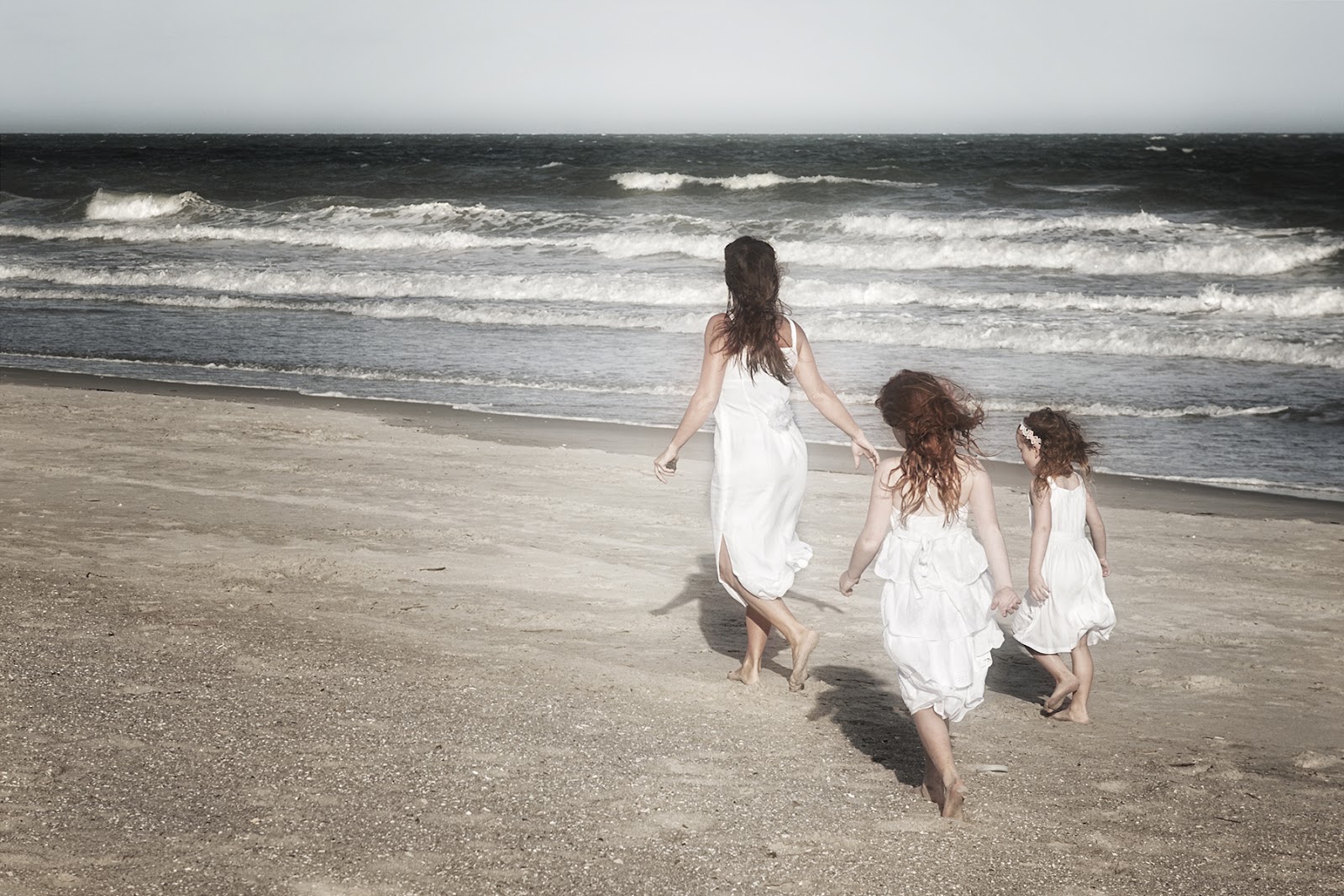
I thought a lot about my favorite image from last year and at first I thought it was a tossup between two from my Forgotten series – Café 27 and Truck. The real answer though is more personal – my true favorite image from 2011 is one I took of my daughter walking down the beach with her girls behind her, heads down, following their mama. Something about my strong baby girl leading the way for her own daughters spoke to me. She is a wonderful mom and a great person for her girls to look up to and follow through life.  

Maureen Minehan
                                                (c) Maureen Minehan
My favorite 2011 image also features family and sand, even though no people appear in it. This image was taken during a family trip to Rehoboth Beach, DE that included multiple generations. My expectations for shooting much that week were low – it can be hard to combine family time with photography, no matter what the location. Still, my brother gamely rose with me each morning at 5 a.m. to capture sunrise from the beach and I treasure both the quiet time I had with him and the new work that came from it. This image reflects the peace and beauty of those early morning excursions and will be included in my upcoming solo exhibit opening March 26th at Multiple Exposures.